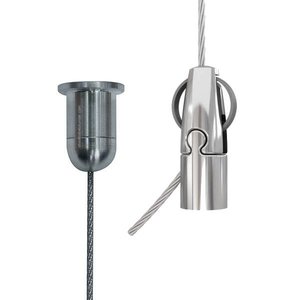
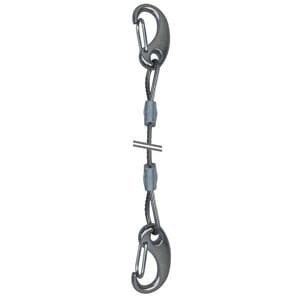
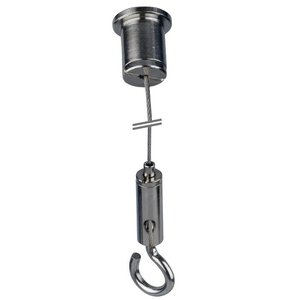
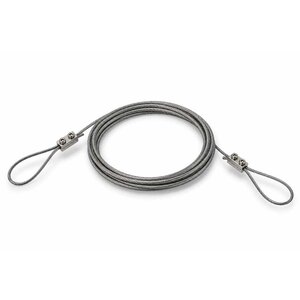
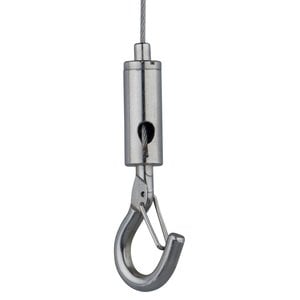
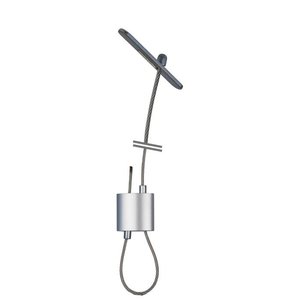
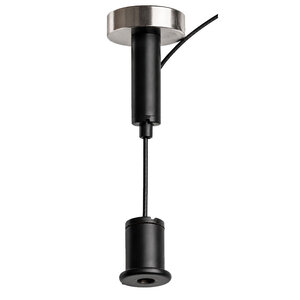
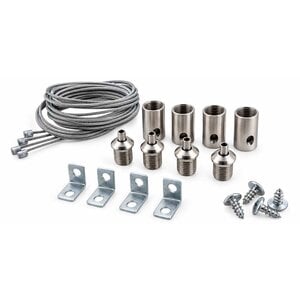
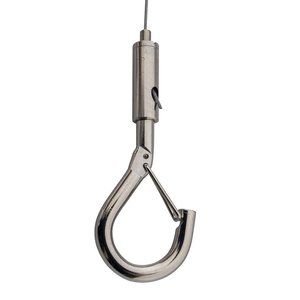
Looking for a professional way to suspend acoustic panels from the ceiling? An adjustable wire rope suspension system provides a clean, discreet installation while allowing panels to be positioned accurately at the required height. This category includes complete suspension kits, cable grippers and different fixing solutions for acoustic panels, ceiling clouds and baffles.
The correct system depends on the panel construction, fixing points, required suspension height and supporting ceiling structure. Different configurations are therefore available with hooks, threaded fittings, adjustable cable grippers and fixings for suitable soft or porous acoustic panel materials.
Free-hanging acoustic panels are widely used in offices, meeting rooms, schools, hospitality spaces, showrooms and other commercial interiors where acoustic performance and architectural design need to work together. Slim wire ropes keep the suspension visually discreet while allowing the acoustic element to be positioned independently below the structural ceiling.
An adjustable acoustic panel suspension system also allows each suspension point to be fine-tuned during installation. This is particularly useful where several panels need to be aligned in rows, grids or at different levels within the same ceiling layout.
Wire rope systems can also be used for acoustic baffle suspension and suspended acoustic ceiling clouds. Baffles are normally installed vertically, while acoustic clouds and ceiling rafts are generally positioned horizontally below the ceiling.
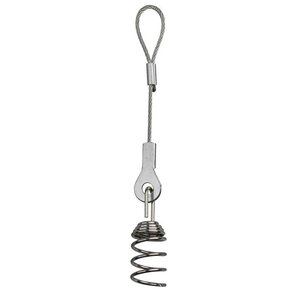
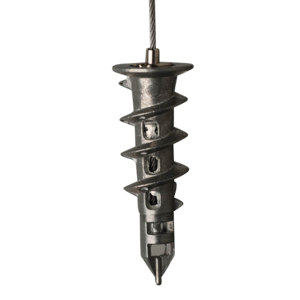
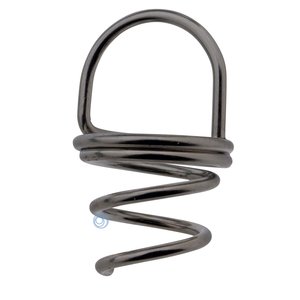
The connection method depends on the construction of the acoustic element. Some panels and baffles incorporate dedicated fixing points, frames or threaded inserts. For suitable soft or fibrous materials, a helix or screw-in anchor may provide a direct connection. Always follow the acoustic panel manufacturer's specified fixing method.
The connection between the wire rope and the acoustic element is a key part of the complete suspension system. Different panel constructions require different fixing principles.
A helix fixing is not a universal solution for every acoustic panel. The material and panel construction must be suitable for this type of fixing. Where a factory-designed fixing point is provided, the recommended connection should normally be used.
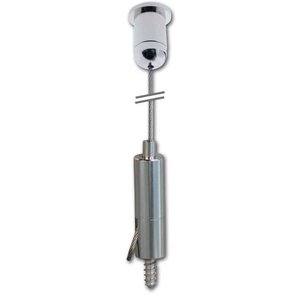
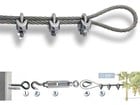
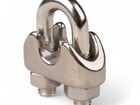
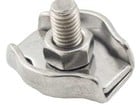
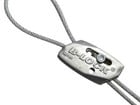
Many professional wire rope suspension systems use a self-locking cable gripper. The wire rope passes through the gripper and can be positioned quickly without creating a new fixed termination each time an adjustment is required.
This becomes particularly useful on larger installations. Individual suspension points can be adjusted separately, allowing several acoustic panels, baffles or ceiling clouds to be aligned accurately within the same installation.
Cable grippers are designed for defined wire rope diameter ranges. Our current range includes systems for various thin wire rope diameters. Always match the cable diameter to the specification of the selected gripper.
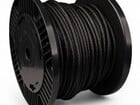
The required wire rope length is primarily determined by the distance between the supporting structure and the final position of the acoustic element. Allow sufficient additional length for installation, levelling and final adjustment.
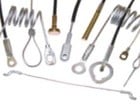
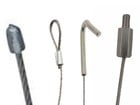
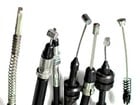
Where a project includes several suspension heights, longer cables can provide additional flexibility during installation. Different cable configurations and end fittings are also available within our suspension cables for hanging systems range.
The number and position of suspension points depend on the size, weight and construction of the acoustic panel or baffle. Larger ceiling clouds and longer acoustic elements may require several suspension points distributed according to the manufacturer's installation requirements.
The complete load path must be considered rather than the wire rope in isolation. The structural ceiling fixing, wire rope, cable gripper, end fitting, panel attachment and supporting structure all form part of the suspension system and must be suitable for the applied load.
This is especially important when working around suspended ceiling grids or lightweight ceiling systems. A suspension system should only be connected to a fixing point or supporting structure that is designed to carry the relevant load.
For professional installations, the key consideration is the correct combination of panel fixing, wire rope diameter, cable gripper and structural fixing. These components need to work together as one system in terms of connection method, load capacity and installation principle.
For larger projects and repeat installations, a reproducible configuration is also valuable. Defined cable lengths, identical grippers, consistent end fittings and predetermined suspension heights make installation more efficient and help maintain consistent alignment across multiple acoustic panels or baffles.
The intended loading direction of the cable gripper must also be respected. Angled cable runs or side loading should only be used where the selected gripper and fixing arrangement are specifically designed for that configuration.
A complete acoustic panel suspension kit is practical when the ceiling fixing, wire rope, cable gripper and panel connection can be used as one coordinated system. For project-specific installations or panels with non-standard fixing points, selecting individual components can provide greater flexibility.
This allows, for example, a specific cable gripper to be combined with a different cable length, ceiling fixing or panel attachment. When building a system from separate components, wire rope diameter, connections and load ratings must be technically compatible.
Need a different cable length, colour, additional suspension points or a specific panel connection? We can also supply custom wire rope suspension systems. Cable length, wire rope diameter, colour, cable grippers, threaded fittings and end connections can be tailored to suit your acoustic panel and project.
Custom configurations are particularly useful for contract interiors, project installations and repeat production where multiple acoustic elements need to be suspended to the same specification. An existing suspension system can often be used as the technical starting point and adapted in length, finish or connection type.
Start with the fixing method provided by the acoustic panel manufacturer. If the panel or baffle has an eye, frame, threaded insert or factory-fitted anchor, choose a suspension system that connects directly to that fixing point. For suitable soft or fibrous panel constructions, a helix fixing may provide an alternative solution.
The suspension height, wire rope diameter, cable gripper, number of suspension points and system load capacity can then be coordinated around that connection. This creates a suspension system that is not only mechanically compatible but also fast to install and easy to align.
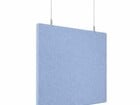
Acoustic panels can be suspended below the ceiling using a suitable wire rope suspension system. The panel connection may use a helix fixing, hook, anchor or threaded fitting depending on the panel design. Always follow the fixing and installation requirements specified by the panel manufacturer.
With an adjustable cable gripper, the suspension height can be fine-tuned during installation. This is particularly useful when several panels, ceiling clouds or baffles need to be aligned within the same ceiling layout.
No. Helix and screw-in anchors are intended for compatible soft, fibrous or porous panel materials where the fixing can achieve sufficient engagement. Check the panel construction and manufacturer's fixing instructions before using this type of attachment.
Yes. Wire rope suspension is commonly used for vertically suspended acoustic baffles. The connection to the baffle varies by system and may use an eye, hook, anchor, helix or dedicated panel fitting.
The correct diameter depends on the selected cable gripper, overall suspension configuration and required load. Our range includes solutions for different thin wire rope diameters. Only combine wire rope and grippers that are designed to work together.
The required number depends on the panel size, weight and construction. Ceiling clouds, long baffles and other acoustic elements may have specific suspension points or spacing requirements defined by the manufacturer.
The complete load path must be considered, including the structural ceiling fixing, wire rope, cable gripper, end fitting and panel attachment. The supporting structure must also be capable of carrying the applied load.
Yes. Depending on the project, cable length, wire rope diameter, colour, cable gripper, connection type and number of suspension points can be adapted. Explore our custom wire rope suspension systems for more options.
Not sure which cable gripper, panel connection or suspension kit is suitable for your acoustic element? Send us the panel type, fixing points, required suspension height and quantity where possible. This allows us to assess more quickly whether a standard suspension system or a custom configuration is the better solution.













 Light
Light
 LED & Infrared
 Acoustic Panels
 Signs & Displays
 Custom Made
 Cable Trays & Profiles
 Shelves & Racks
 System Grippers
 Hanging cables
 Wine Racks