



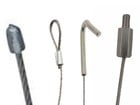
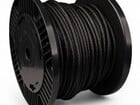
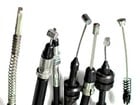
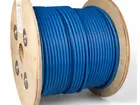










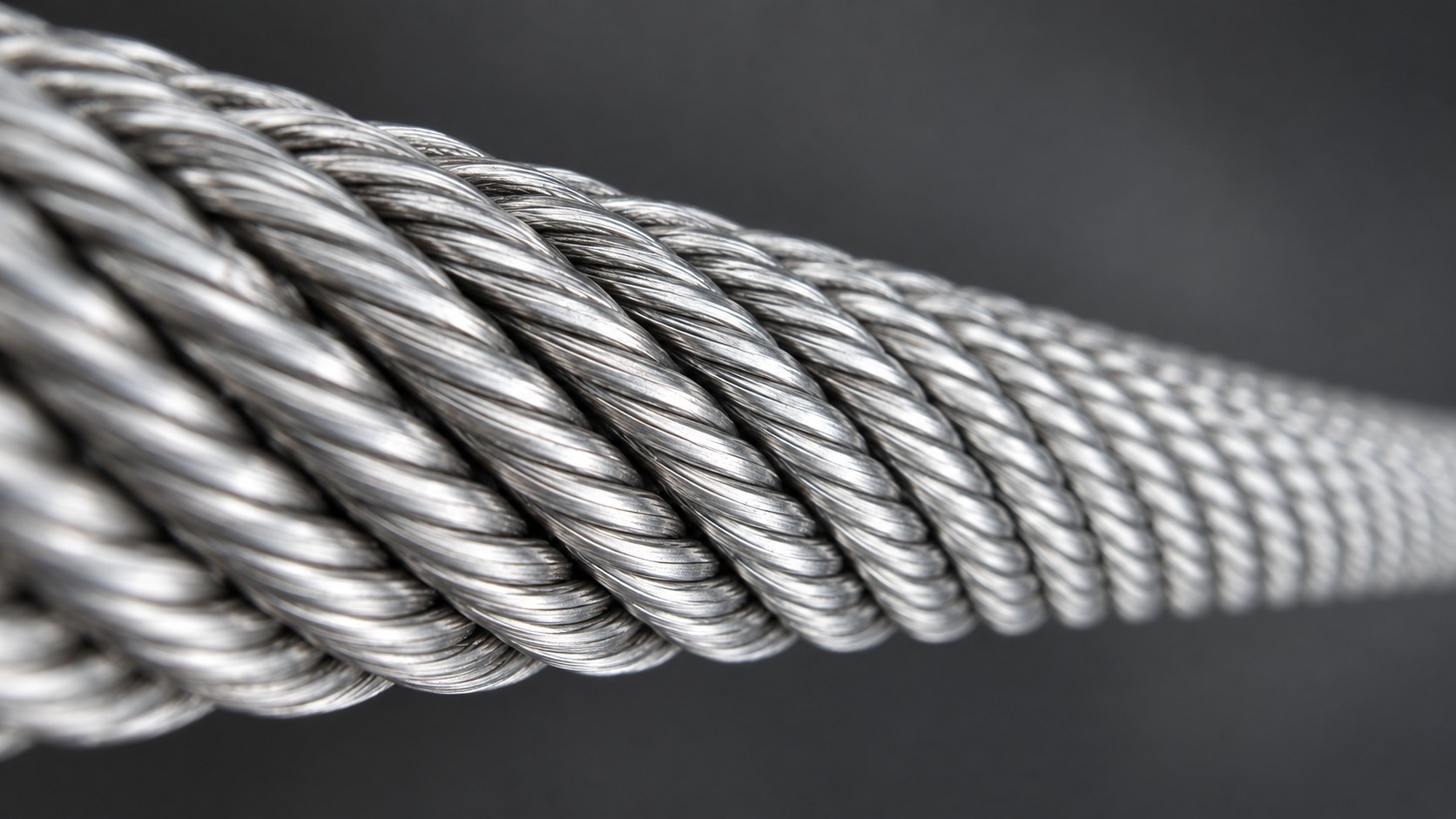
Steel wire rope explained: choosing the right cable, making a loop and tensioning
Steel wire rope is used for all kinds of projects, from supporting climbing plants to making a washing line or a technical tensioning system. But which cable should you choose? How do you make a suitable loop? And how do you tension the cable?
A good cable connection starts with compatible components. Choose the cable according to the application and load, use suitable end fittings and install the tensioner according to the product instructions. Here is what to look out for.
What is steel wire rope?
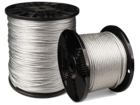
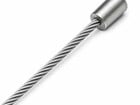
Steel wire rope consists of several thin steel wires assembled into strands. These strands are laid around a core. This construction combines strength with flexibility.
The terms steel wire and steel cable are sometimes used interchangeably. Technically, steel wire is a single wire, while steel wire rope consists of multiple wires. Always check the product description.
You will see descriptions such as 7x7 and 7x19. These indicate how the cable is constructed.
What types of steel cable are available?
When choosing a cable, distinguish between its material, finish and construction.
Galvanised steel cable
Galvanised steel cable has a protective zinc coating. This helps limit corrosion. Its service life depends on factors such as the environment, wear and damage to the protective coating.
Browse the galvanised steel cables and compare the available diameters and versions.
Stainless steel cable
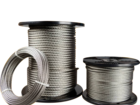
Stainless steel cable is made from a corrosion-resistant steel alloy. It can be suitable for outdoor use and damp conditions. Check the stainless steel grade and the intended operating environment.
Stainless steel is not immune to corrosion in every situation. Material selection requires particular care in environments containing salt or chlorine.
Explore the range of stainless steel wire ropes.
Plastic-coated steel cable
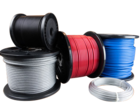
Plastic-coated steel cable has an outer sheath, for example made from PVC. A metal cable sits underneath. Check which metal is used and whether the coating is suitable for the environment.
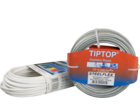
Pay attention to the dimensions too. The white stainless steel washing line, 3/5 mm × 20 metres has a 3 mm metal cable and a 5 mm outside diameter including the coating. The plastic does not count as additional steel thickness.
Find other versions in the plastic-coated wire rope range.
What is the difference between 7x7 and 7x19?
The construction is one of the factors that determines how flexible a cable is.
| Construction | Structure | Main difference |
|---|---|---|
| 7x7 | Seven strands, each containing seven wires | Generally less flexible than 7x19 at a comparable diameter. |
| 7x19 | Seven strands, each containing nineteen wires | Generally more flexible than 7x7 at a comparable diameter. |
A flexible cable bends more easily, but this does not automatically make it suitable for every pulley or moving application. Check the specified sheave diameter and operating conditions as well.
What steel cable diameter do I need?
Choose the diameter according to the application and expected load. Also consider the cable construction, end fittings and attachment points.
Establish the following before ordering:
- Application: what do you want to support, guide or connect?
- Environment: will the cable be used indoors, outdoors or in a damp room?
- Load: what forces will act on the complete assembly?
- Span: what distance does the cable need to cover?
- Movement: will the cable remain in place or bend regularly?
Use the wire rope breaking load table to compare options. Then check the specifications of the exact product.
How much weight can a 3 mm steel cable carry?
There is no universal figure. Two cables with a diameter of 3 mm can have different breaking loads.
For example, the 3 mm stainless steel cable with a 7x19 construction and a length of 100 metres has a stated minimum breaking load of 478 kg. This is not a permitted suspended load.
The minimum breaking load describes the specified minimum breaking force. The working load limit applies under defined operating conditions. The applicable design factor and end fittings also matter. Compare product values in the wire rope breaking load table.
How do you make a proper loop in steel cable?
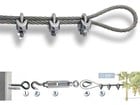
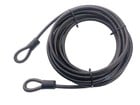
To make a loop, turn the cable end back and secure it with a suitable termination. The correct assembly method depends on the system you choose.
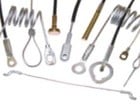
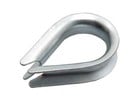
A good loop has appropriate dimensions, compatible components and a correctly installed termination. A wire rope thimble can support the inside of the loop and reduce wear at the contact point.
What do you need?
Depending on the system, you will need:
- A suitable steel cable.
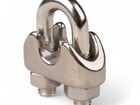
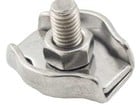
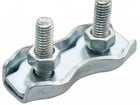
- Compatible wire rope clips or another specified termination system.
- A wire rope thimble where required.
- A suitable wire rope cutter.
- The specified installation tools.
Step 1: choose the termination before cutting the cable
Check that the clip or fitting is suitable for the cable diameter, material and construction.
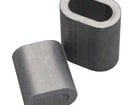
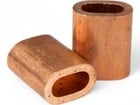
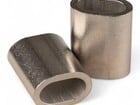
U-bolt clips, crimping ferrules and other cable fittings have different installation requirements. For a crimped termination, for example, the cable, ferrule and crimping tool must be compatible.
Step 2: measure the cable length
Allow enough cable for the loop and the turned-back end. The required turn-back length is specified by the termination system.
Will you be adding a turnbuckle? Allow for its installed length and adjustment range before cutting the cable.
Step 3: form the loop
Turn the cable back to form the required loop. If a thimble is used, insert a suitable one and lay the cable around it.
Avoid kinks and do not force the cable into an unsuitable bend. The loop must fit the connector that will attach it to the rest of the assembly.
Step 4: install the clips
Follow the instructions for the number of clips, their orientation, spacing and tightening torque. For crimping ferrules, follow the specified pressing procedure.
There is no universal number of clips for every cable. The installation instructions for the selected termination system determine what is required.
Step 5: check the loop assembly
Check that all components are correctly installed and carry out the required follow-up inspection. Appearance alone does not establish how much load the connection can withstand.
Check the product information for the selected wire rope clips and ferrules.
For lifting, the complete wire rope assembly must be suitable for that purpose, with a specified working load limit and the relevant documentation. A homemade loop is not automatically suitable as lifting equipment.
How do you tension steel cable with a turnbuckle?
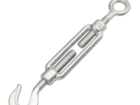
A turnbuckle allows you to adjust cable tension. Rotating the central body changes the distance between its end fittings.
Choose a turnbuckle that suits the expected load, environment and attachment points. Browse the wire rope tensioners.
Step 1: secure the first end
Attach the first cable end to a suitable fixing point. Check that the wall, post or other structure can withstand the expected forces.
Use a suitable termination, such as a correctly assembled loop with a thimble.
Step 2: preset the turnbuckle
Extend the turnbuckle enough to leave adjustment travel for tensioning. Stay within the permitted adjustment range.
Do not unscrew the end fittings completely. Both ends must remain screwed into the body by at least the specified minimum thread engagement.
Step 3: fit the turnbuckle
Install the turnbuckle between the other cable end and the attachment point. Keep the components aligned with the direction of pull.
Take up the loose cable length before securing the final termination. Then use the turnbuckle to adjust the tension in a controlled way. Load the turnbuckle in accordance with the selected product's instructions.
Step 4: tension the cable gradually
Rotate the body with the specified tool. Use a correctly sized spanner if the turnbuckle has spanner flats.
Prevent the cable from twisting and check the end fittings and fixing points as you adjust it. Stop at the tension specified for the application. Do not simply keep tightening until all visible sag disappears.
Step 5: lock the turnbuckle
Secure the assembly according to the product instructions. If the turnbuckle has locknuts, tighten them as specified. Other models may require a different locking method.
Finally, check the end fittings, thread engagement and attachment points.
Frequently asked questions about steel wire rope
How do I make an eye in steel wire?
For multi-wire steel cable, an eye can be formed using a suitable loop termination. Use the correct clips and a thimble where appropriate. Do not apply this method to solid steel wire without confirming that the components are suitable.
How do I cut steel cable without fraying?
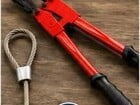
Use a wire rope cutter designed for the diameter and material grade. The correct tool helps cut the wire bundle cleanly. Browse the wire rope cutters and follow the selected tool's instructions.
Should I remove the plastic coating before fitting a clip?
That depends on the termination system. Check whether the fitting must be installed directly on the metal cable. Select the clip size according to the product instructions, not just the coated outside diameter.
Can I tension steel cable without a turnbuckle?
Yes, if the selected system has its own suitable tensioning or adjustment mechanism. A separate turnbuckle is useful when you want to readjust the tension later.
How do I make a strong loop?
Use a suitable cable and a compatible termination system, and follow the installation instructions. The strength of the bare cable does not automatically apply to the loop assembly. Adding more clips does not make an unsuitable system suitable.
Which steel cable can I use for climbing plants?
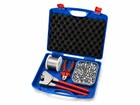
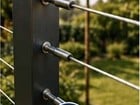
Choose a system that suits the plant, span and supporting surface. Allow for mature growth and loading from wind and moisture. For example, take a look at the 61-piece stainless steel climbing aid kit.
Choosing steel cable and matching components
Start by noting the application, required length, environment and expected load. Then select the cable, terminations and turnbuckle as a compatible assembly.
Browse the stainless steel cables, galvanised steel cables and plastic-coated cables.
Need help choosing? Call Staalkabelstunter on +31 488 410 119. Explain what you will use the cable for, the distance it needs to span and how you intend to attach the ends.






Reacties
Be the first to comment...